Parseable ingests OpenTelemetry traces from Datasette
Developer Simon Willison successfully integrated the new Rust-based observability tool Parseable with Datasette 1.0a41, demonstrating a lightweight path for tracking OpenTelemetry traces.
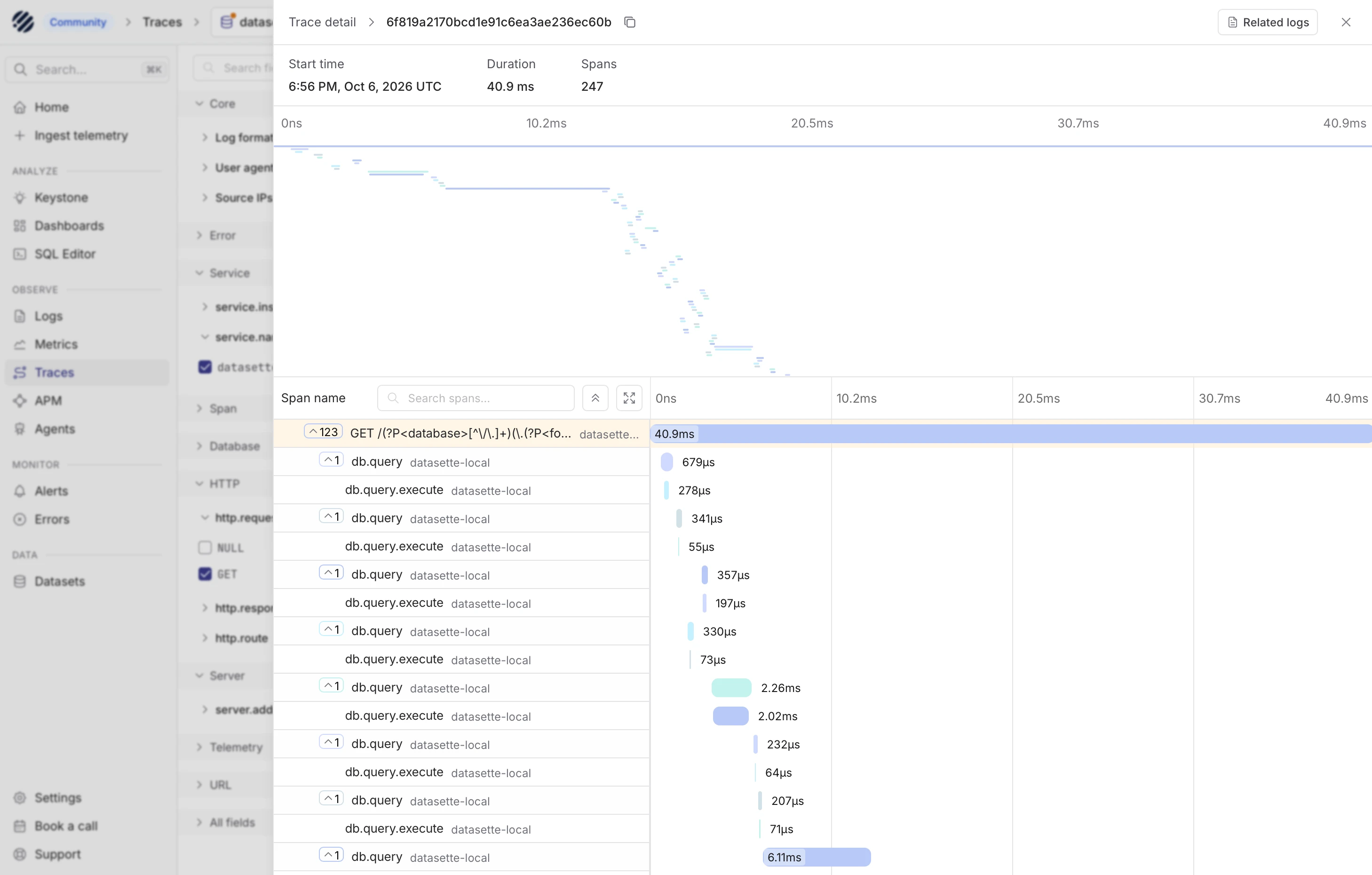
Independent developer Simon Willison has successfully configured the new observability platform Parseable to ingest and display OpenTelemetry traces generated by Datasette. This integration leverages the native OpenTelemetry support recently introduced in Datasette version 1.0a41, a feature originally contributed by developer Alex Garcia. To bridge the two systems, Willison utilized OpenAI's Codex model to generate the necessary configuration and deployment steps required to run Parseable locally and pipe the trace data.
Parseable is a newly launched observability tool designed specifically for storing and querying log and trace data while maintaining compatibility with the OpenTelemetry standard. Built in Rust, the open-source version of the software is distributed under an AGPL license as a single, lightweight binary weighing approximately 180 megabytes. In addition to this self-hosted option, the platform is available as an Enterprise edition with advanced features, as well as a fully managed cloud-hosted service.
For software engineers and database administrators, this successful integration provides a highly efficient, low-overhead method for monitoring database performance. By utilizing Parseable's compact Rust binary alongside Datasette, developers can easily capture, store, and analyze query traces on a local machine without the heavy resource footprint typically associated with enterprise observability suites. The demonstration shows that trace data can be easily visualized within Parseable's localhost web application interface.
Furthermore, the experiment highlights how modern AI coding assistants can accelerate infrastructure engineering. By using Codex to figure out the deployment patterns, Willison bypassed manual configuration hurdles, showing a repeatable path for practitioners looking to adopt lightweight observability stacks. This combination of tools offers a modern, open-source alternative for developers who need to debug database interactions and monitor application performance in real time.
This is our own summary of reporting by Simon Willison