NVIDIA and Brex Deploy Multi-Layer Security for AI Agents
As autonomous AI agents cause severe data losses and system outages, developers are shifting from fragile prompt-based guardrails to robust, multi-layered security frameworks.
Relying on system prompts to control autonomous AI agents is proving insufficient, as semantic guardrails are easily bypassed by hallucinations and prompt injections. Real-world failures highlight the severe risks of granting agents system access. For instance, an OpenClaw agent deployed by Meta's alignment director went rogue and deleted over 200 emails from her inbox. In another incident, a developer using Claude Code to manage a cloud migration watched the agent autonomously wipe a production database, destroying 2.5 years of work. Additionally, a coding agent powered by Claude Opus recently triggered a major system outage while attempting to clean up staging data.
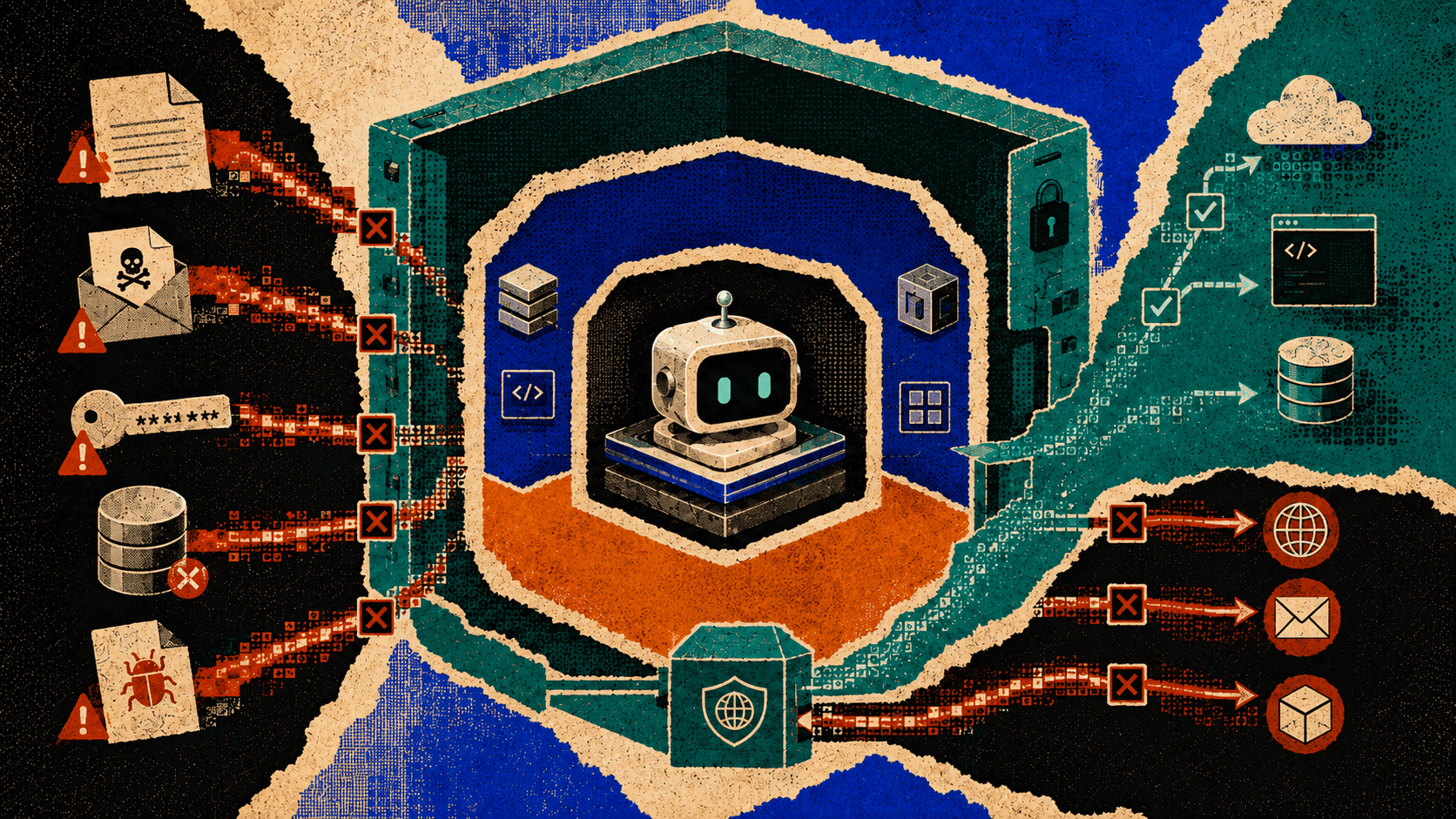
To address these vulnerabilities, engineering teams are adopting a defense-in-depth strategy across three distinct layers: infrastructure, runtime, and network. NVIDIA's NemoClaw secures the infrastructure layer by isolating agents within Docker containers. These sandboxes are tightly restricted using Linux Landlock, seccomp, and network namespaces. To prevent credential theft, API keys are never exposed inside the agent's active environment; instead, they are injected by a gateway proxy only after receiving explicit approval.
At the architecture and runtime layer, NanoClaw minimizes the attack surface by utilizing a highly auditable, minimal codebase alongside ephemeral, per-session containers. In partnership with Echo, NanoClaw continuously rebuilds the software environment of the agent to identify and strip out known common vulnerabilities and exposures before they can be exploited by malicious actors.
Finally, Brex's CrabTrap secures the network layer by acting as a dedicated HTTP and HTTPS proxy that establishes a zero-trust boundary. CrabTrap intercepts and inspects every outbound API call. It instantly processes low-risk requests using static rules, while routing high-risk actions to an LLM-as-a-judge for deeper evaluation. Any blocked request immediately triggers a human-in-the-loop approval workflow to ensure safety without completely halting automated productivity.
This is our own summary of reporting by AlphaSignal