Databricks Lakehouse Boosts SQL Performance by 77 Percent
Databricks has revealed that its Lakehouse platform improved SQL performance by 77 percent since 2022, offering enterprises a faster, cheaper alternative to traditional data warehouses.
Databricks has announced that its production SQL workload performance has improved by 77 percent since its 2022 baseline, representing a fourfold increase on the Databricks Performance Index. These gains, measured across billions of active queries, stem from updates to the Photon vectorized execution engine, query planning, and caching. Over a recent five-month period, business intelligence workloads improved by 14 percent, data exploration by 13 percent, and ETL by 9 percent. Additionally, independent TPC-DS testing of 1-TB workloads demonstrated sub-second p50 latency at a 74 percent lower cost than classic compute.
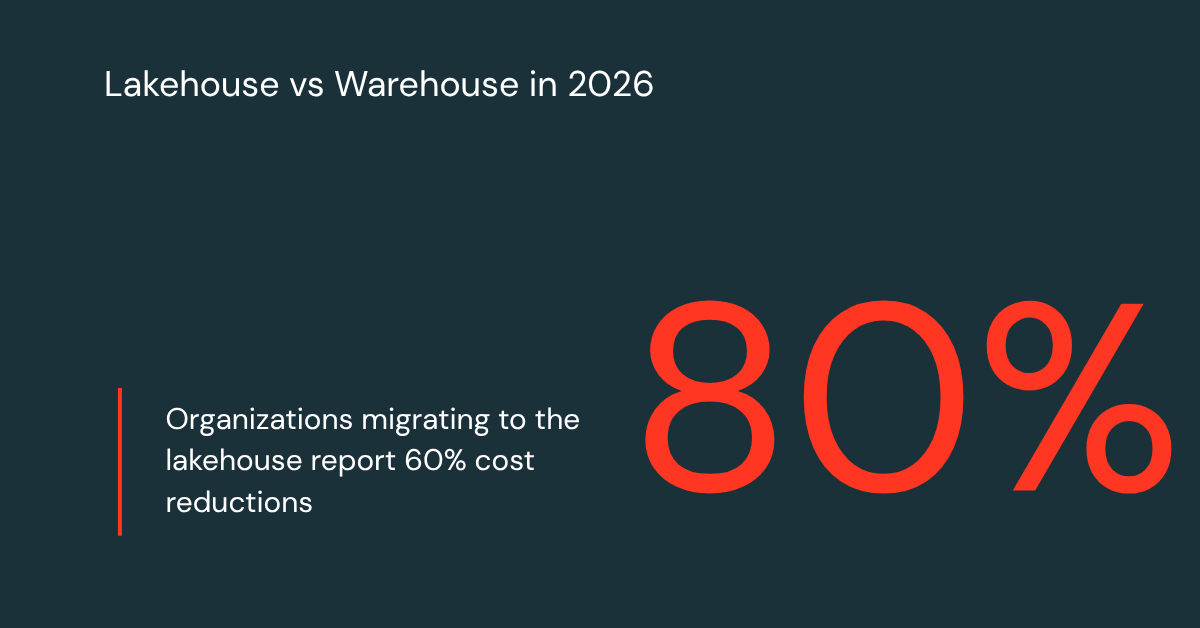
These benchmark improvements translate into significant real-world savings for enterprises migrating from traditional warehouses. Lumen Technologies migrated 133 TB of telecom data from Cloudera to Databricks, securing a 90 percent query performance improvement and cutting compute costs by 30 to 40 percent using Databricks Lakehouse Serverless. Trek Bicycle accelerated its retail analytics by 80 to 90 percent, while AXA Japan achieved a 60 percent reduction in warehouse costs and a 70 percent drop in ETL costs. Other migrating organizations report overall cost reductions between 25 and 75 percent, alongside 33 percent lower idle-compute costs.
For practitioners, the lakehouse architecture collapses separate data systems into a single governed layer. The platform features Lakehouse//RT, a serverless SQL warehouse that delivers analytical reads with latency as low as 10 milliseconds and handles up to 12,000 queries per second. To ease the transition, tools like Lakebridge and the Databricks Migration Agent automate SQL translation. This automation helped Vivriti Capital migrate from Redshift in eight weeks, and allowed IndusInd Bank to migrate 1.5 PB of data across 44 business areas in 15 months.
This shift is crucial as organizations prepare for autonomous AI. While a 2026 Deloitte report indicated that only one in five companies has a mature governance model for AI agents, Databricks unifies governance. Through Unity Catalog and Unity Gateway, practitioners can manage structured tables, unstructured PDFs, and AI model runtimes under a single framework. By utilizing open formats like Delta Lake and Apache Iceberg via UniForm, the platform eliminates the need to copy data between separate machine learning and analytics environments.
This is our own summary of reporting by Databricks AI