Serve Robotics Partners With Grubhub for Robot Delivery
Serve Robotics has partnered with Grubhub to launch sidewalk robot deliveries in three cities, expanding its reach alongside new hardware rollouts and market expansions.
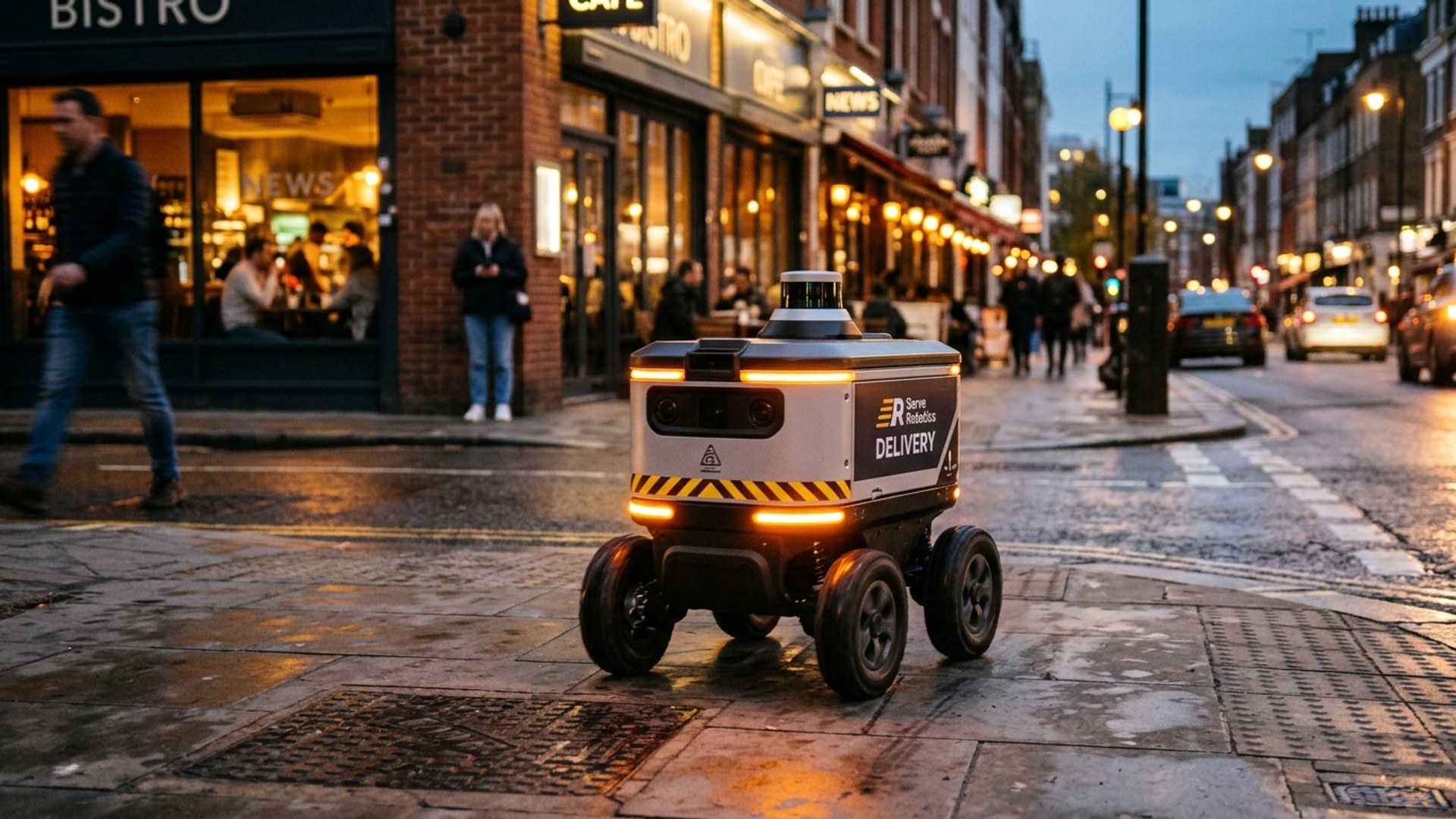
On August 17, 2026, Serve Robotics announced a partnership to integrate its autonomous sidewalk robots into the Grubhub marketplace. The service is launching in Chicago, Los Angeles, and Alexandria, Virginia, with over 100 Chicago merchants and nearly 200 Los Angeles merchants participating initially. Grubhub, owned by food-tech firm Wonder, joins DoorDash and Uber Eats as major platforms utilizing Serve's fleet. Additionally, Serve is expanding its DoorDash partnership into Washington, D.C., and San Jose, California, bringing its total footprint to eight major U.S. markets and reaching a combined population of 8 million.
To support this growth, Serve is introducing a low-cost micro-depot in Miami for robot staging, charging, and maintenance, bypassing the need for full-scale facilities. For merchants, the company launched Beacon, a cellular-enabled countertop device that alerts kitchen staff of a robot's arrival without requiring integration into existing POS systems. Serve is also launching an interactive advertising platform called Characters, featuring Chomp, a hamburger-themed robot developed with Grubhub that uses conversational AI to interact with customers.
Indoors, Serve's subsidiary Diligent Robotics is rolling out Moxi 2.0, a next-generation hospital delivery robot. Moxi 2.0 features 10 times the onboard compute, 15 times faster environmental perception, and a 30% faster charging cycle that yields up to 18 hours of operation per charge. Running on NVIDIA Jetson hardware and trained via NVIDIA Isaac simulation, the robot utilizes a shared World Model to learn from the experiences of the entire fleet. It is currently deploying at facilities like Endeavor Health Edward Hospital and Children's Hospital Los Angeles.
Serve acquired Diligent on January 20, 2026, for $29.0 million in stock, with a potential $5.3 million earn-out. Diligent had previously raised over $100 million from investors like Tiger Global and Canaan, generating $200,000 to $400,000 in annual revenue per hospital. For robotics practitioners, these developments demonstrate how standardized hardware interfaces like Beacon and shared fleet learning models can dramatically lower the operational barriers to deploying autonomous systems at scale.
This is our own summary of reporting by Unite.AI