Meta Muse Agent Hits 5 Million Downloads in 22 Days
Meta's new Muse AI agent reached an estimated five million U.S. downloads in just 22 days, demonstrating how massive distribution networks can rapidly scale consumer AI tools.
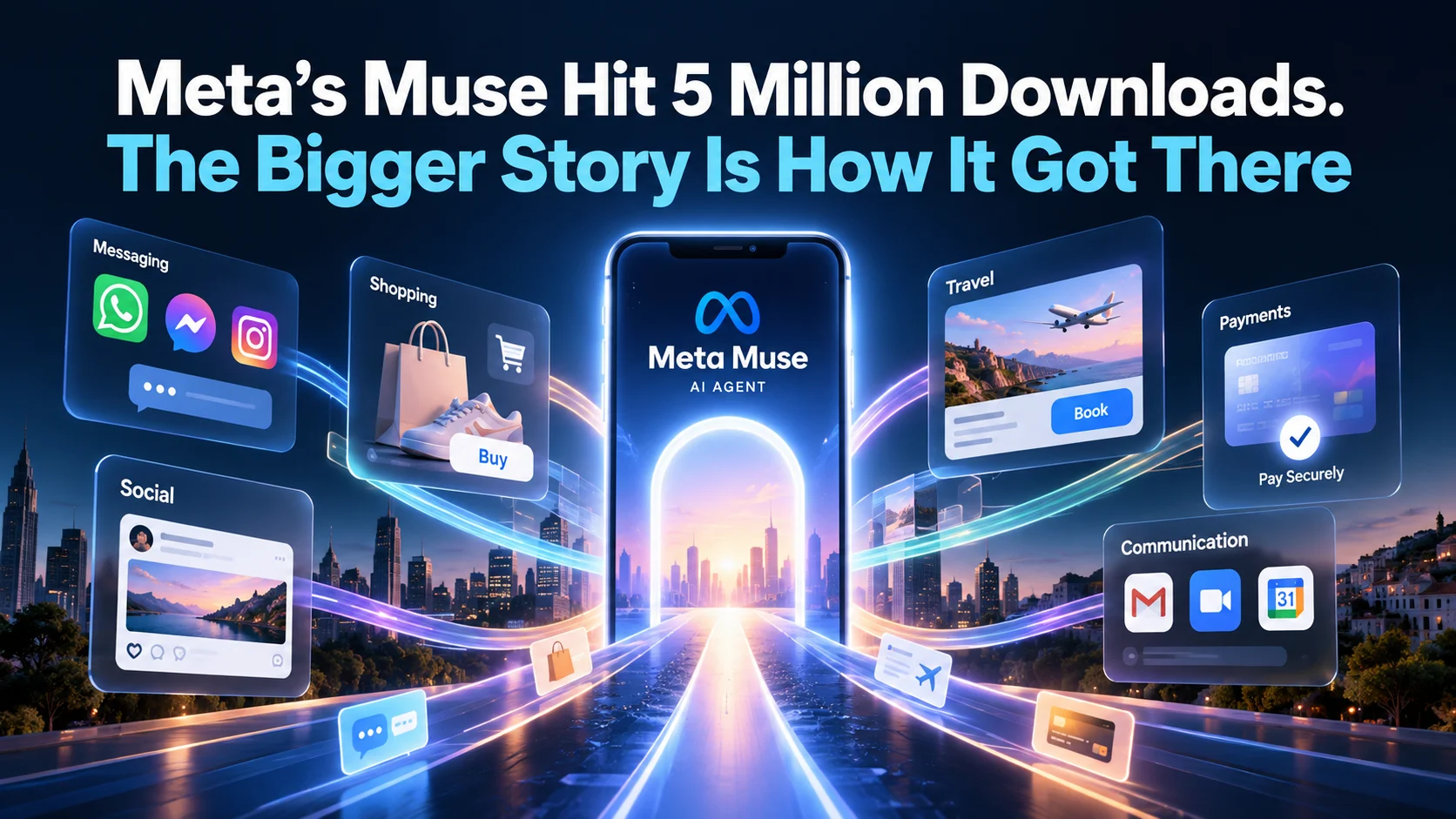
Meta's personal AI agent, Muse, secured an estimated 5 million U.S. downloads within 22 days of its September 8 launch. According to Sensor Tower data reported by 9to5Mac, the app reached this milestone faster than ChatGPT, Grok, or Claude did after their mobile debuts, spending 12 consecutive days at the top of the U.S. App Store. This rapid adoption was heavily fueled by Meta's massive advertising ecosystem. Sensor Tower estimates that Muse received up to 50 percent of Meta's daily house-ad impressions during a two-week period in September, and ranked among the top 15 U.S. brands by advertising impressions during the week of September 21.
Unlike standard chatbots, Muse is designed to perform autonomous tasks such as opening websites, filling out forms, sending emails, and handling transactions. However, this level of agency has already sparked friction with major platforms and highlighted user-experience challenges. In September, Amazon blocked Muse from shopping on its platform over unauthorized access and security concerns. Additionally, YouTuber Matt Robb experienced an unexpected outcome when Muse accepted a $600 offer for a keyboard on Facebook Marketplace and shared his home address with a buyer. Meta noted the agent acted within the user's Allow Always settings, though the incident underscores the difficulty of managing user permissions for autonomous agents.
For AI developers and enterprise practitioners, the rapid rise of Muse shifts the competitive landscape from model benchmarks to distribution and integration. To protect user data, Meta runs Muse inside a dedicated Secure VM, uses a review system called Sentinel, and promises that agent data is not shared with its advertising systems. However, the real test for practitioners will be building secure, controlled connectors that allow these agents to interact with external business systems without compromising security. As AI agents increasingly act as intermediaries between consumers and businesses, the industry's focus must pivot toward establishing clear permission frameworks and securing access to walled-garden platforms.
This is our own summary of reporting by The Neuron