Grab Cuts Mechanical Analytics Work to 30% With AI Agents
Ride-hailing giant Grab has successfully deployed a suite of AI agents to automate routine data tasks, slashing its analysts' mechanical workload from 44% to 30% in just four months.
Southeast Asian tech giant Grab has successfully integrated AI agents into its data operations, reducing the proportion of routine, mechanical tasks handled by human analysts from 44% in February to 30% in June. To guide this transition, the company implemented a five-level autonomy framework. At Level 3, human workers frame questions and review outputs while agents write queries and draft analyses. Level 4 allows agents to orchestrate workflows under human-reviewed gates, while Level 5 grants end-to-end autonomy governed by human-defined escalation rules. Grab still holds humans accountable for final decisions, business assumptions, and causal interpretations.
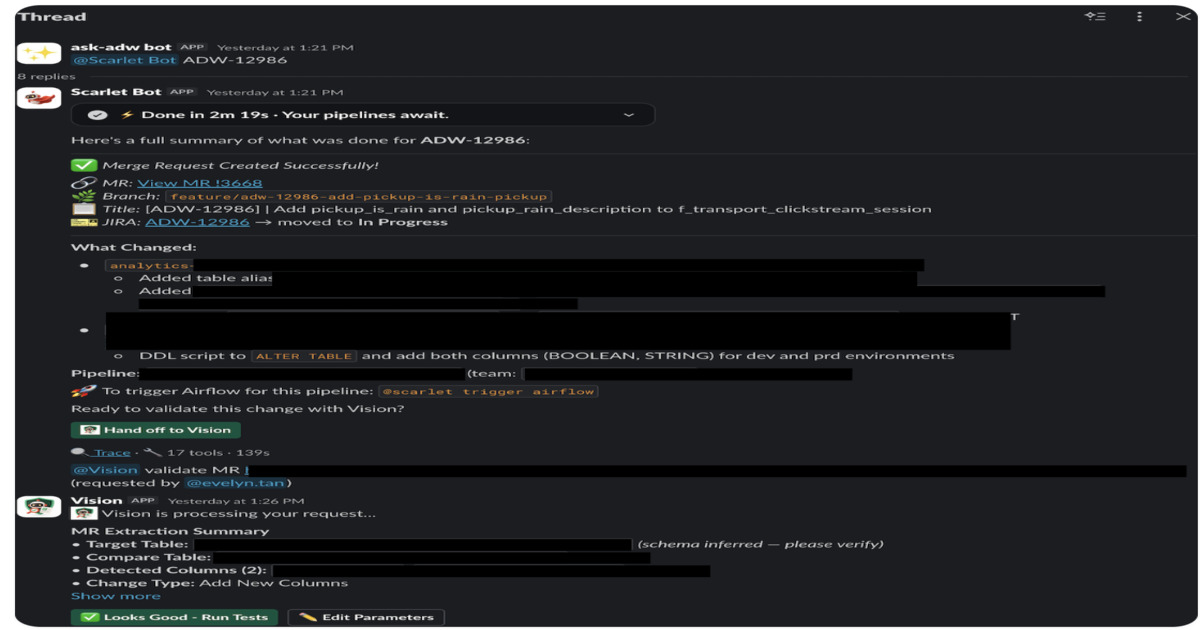
The automation relies on several specialized systems. A tool called Spartan processes natural language requests via Slack, utilizing more than 50 skills and 120 analysis frameworks to route queries. To ensure accuracy, Grab's ContextIQ system manages a vast data context layer containing over 5,000 certified tables and metrics, 4,000 context documents, and 2,000 golden records. For operational maintenance, an agent named Scarlet diagnoses and repairs pipeline failures. Meanwhile, developers build these workflows using the BriX portal, which saw its usage grow tenfold since September, logging 31 production deployments, 283 merge requests, and 60 features in the first half of the year.
These agentic systems have dramatically boosted self-service analytics. Between March and May, automated resolutions without human intervention rose from 53% to 67% for metric requests, 63% to 90% for data pulls, and 50% to 81% for SQL requests. Around 75% of these inquiries came from outside the analytics team, with 85% receiving a response in under a minute. For data practitioners, this shift represents a fundamental change in daily responsibilities. As Maanas Prabhakar, Grab's analytics lead, noted, the transition forces teams to reconsider "what an analyst does" when AI handles data preparation and basic reporting, freeing professionals to focus on strategic, high-value business decisions.
This is our own summary of reporting by InfoQ AI